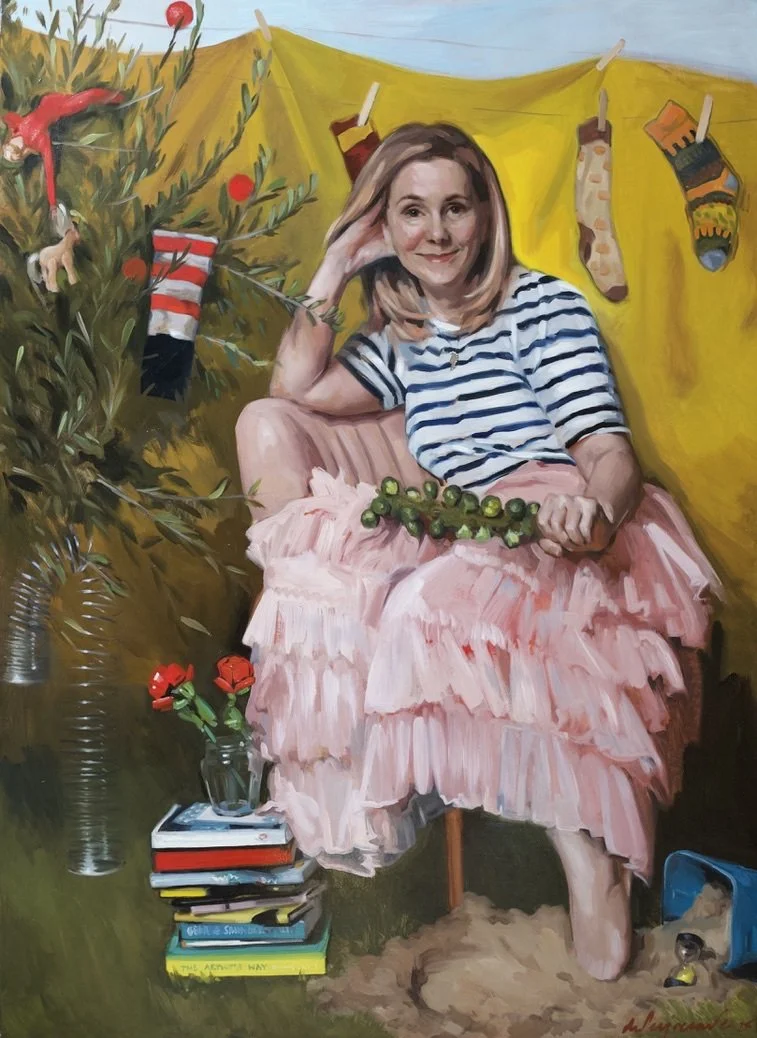
Sally Phillips
Comedian, actor and writer, Sally has built a career by telling the truth through humour.
This portrait is part of the Empowering Her Collection, featuring the women shaping Britain today.
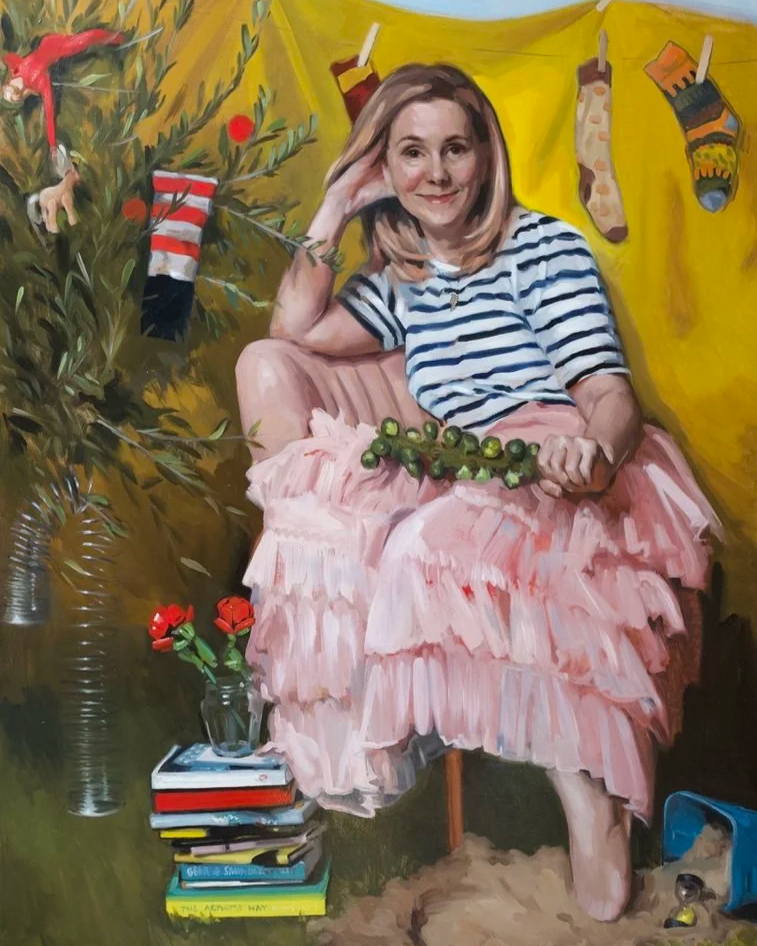
A woman who tells the truth by making us laugh.
From Smack the Pony to Bridget Jones and Miranda, her career was built on turning what's real into what's funny, and later, on turning what's difficult into what's understood.
Sally has become an advocate. As a mother to a son with Down's syndrome, she has spoken openly about exhaustion, love and the barriers families like hers still face, often where others might have stayed private.
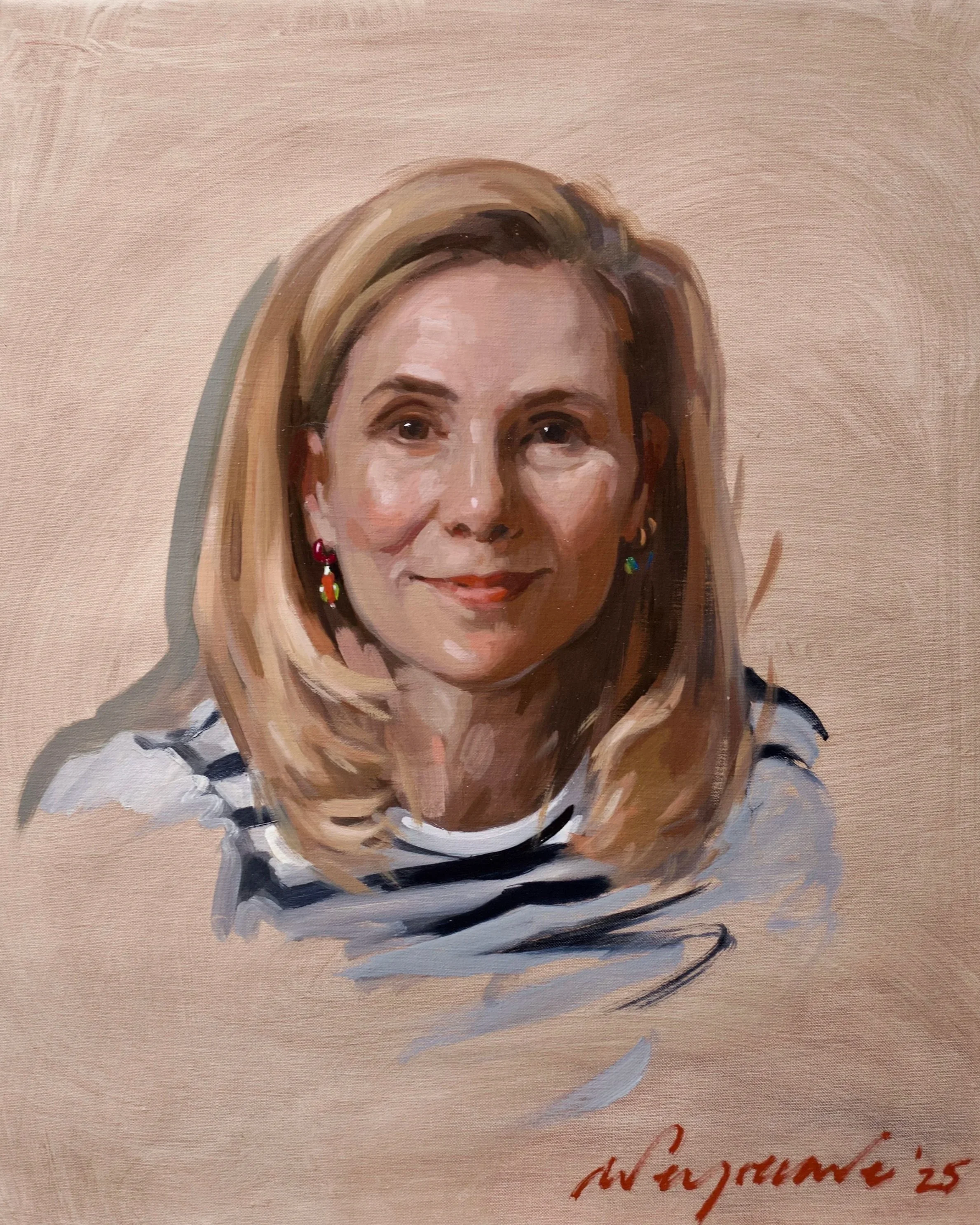
During the portrait sitting, Sally spoke about vulnerability.
How humour, tiredness and care can all co-exist, and how none of it needs performing to be true.
Her life reflects a rare kind of honesty: a woman who has used comedy not to hide from difficulty, but to make room for it, and in doing so, made space for other families to feel less alone.
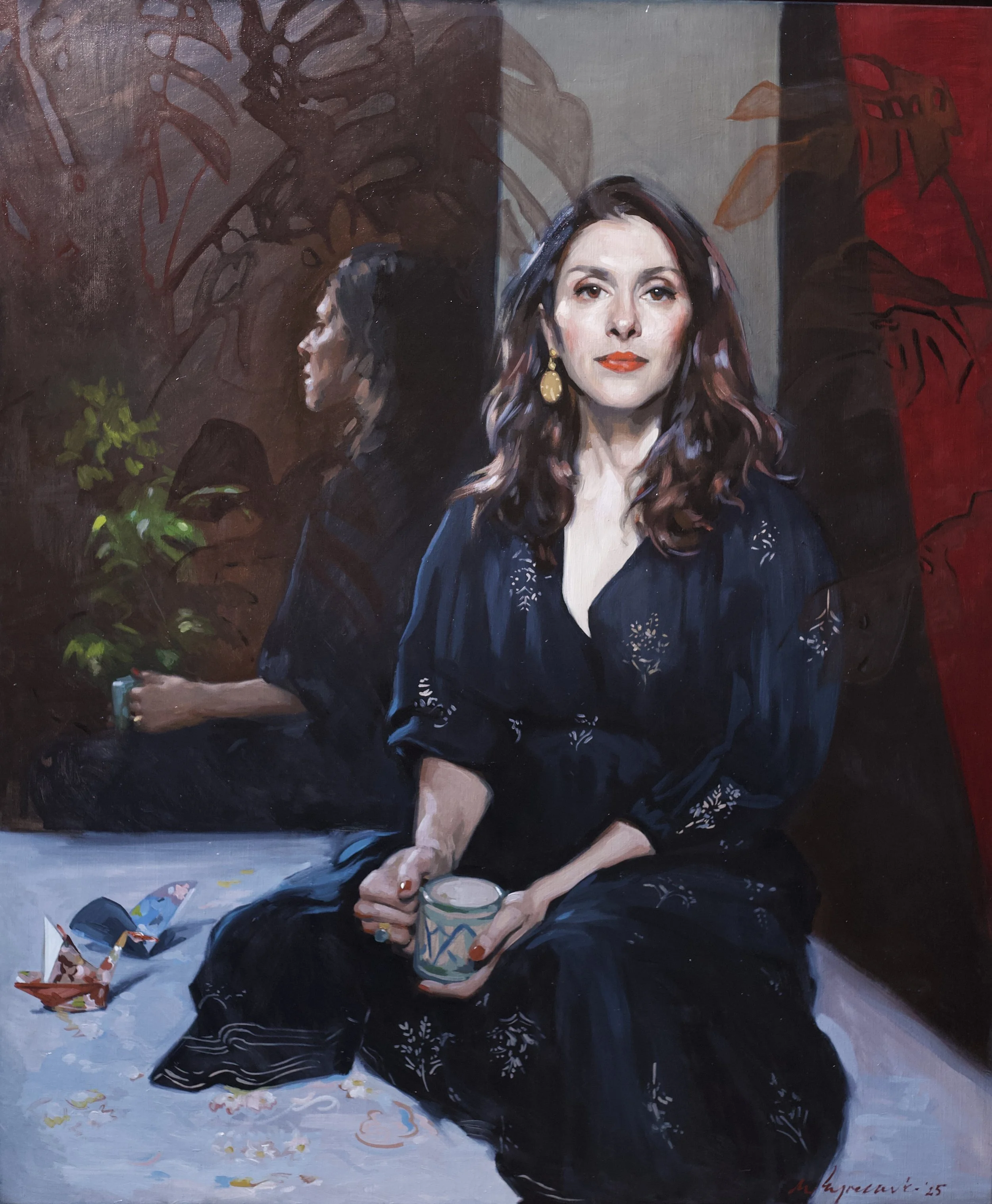
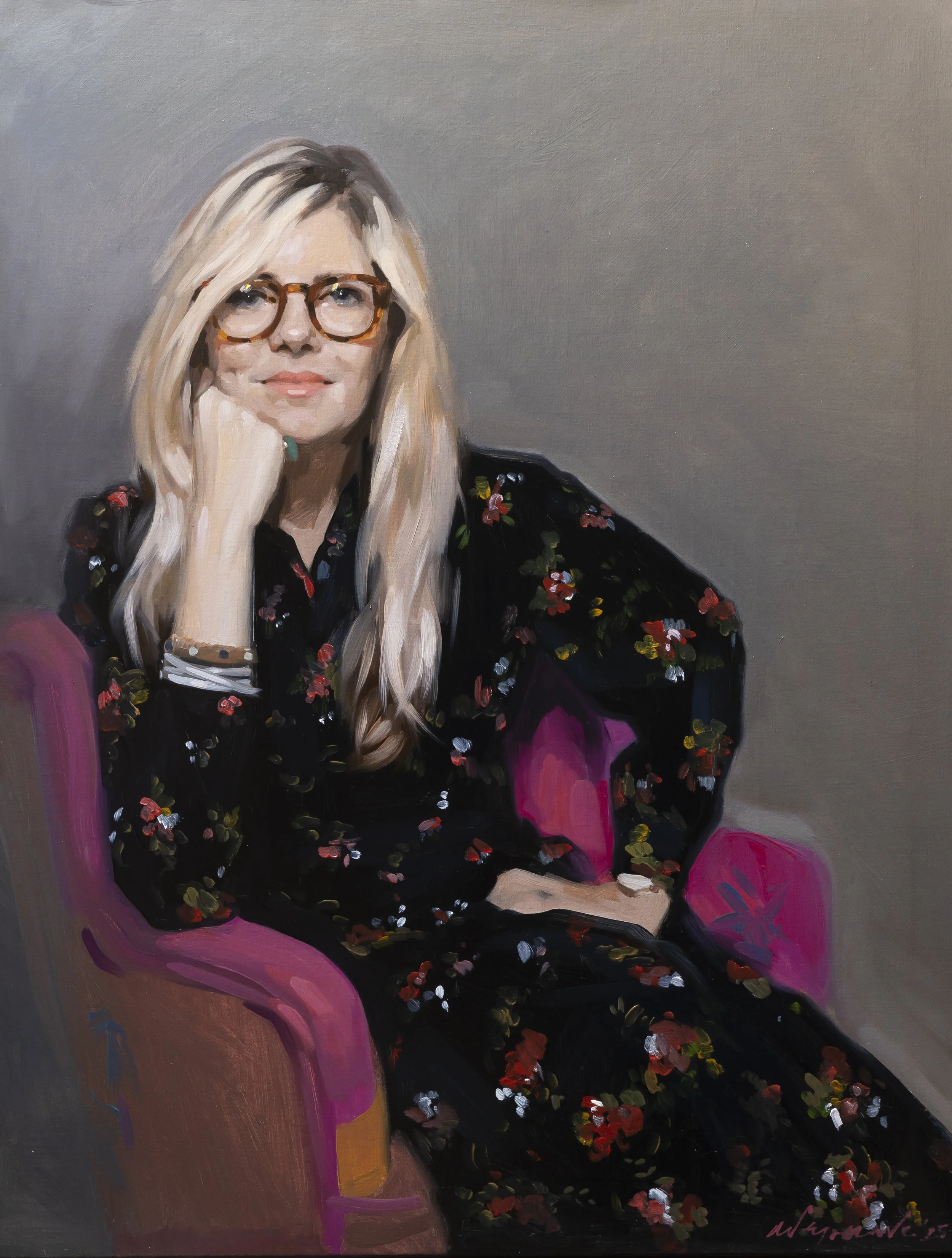
This portrait captures that honesty, not as a performance, but as a single unguarded moment between crying and smiling. The expression that can't be acted, only felt.
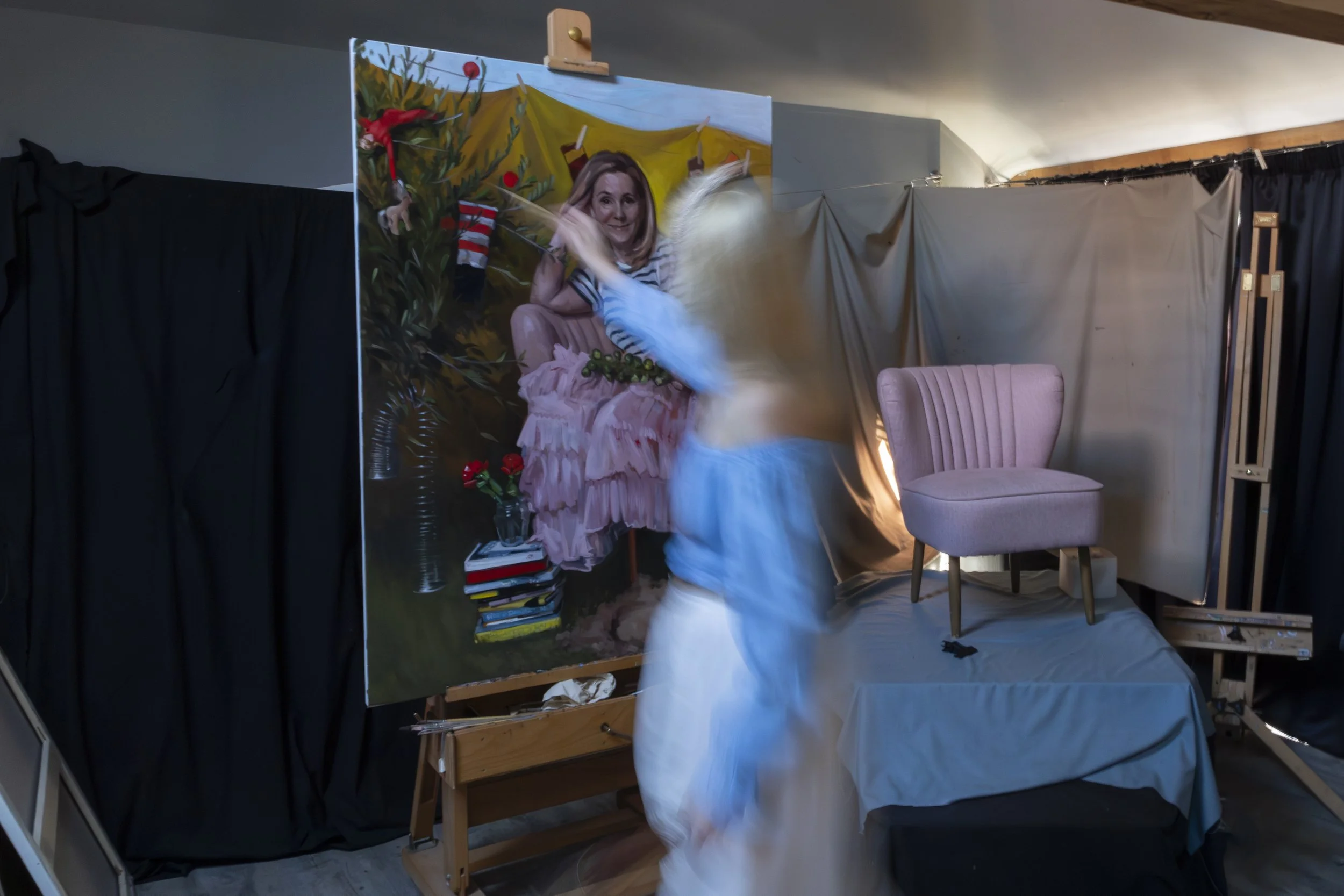
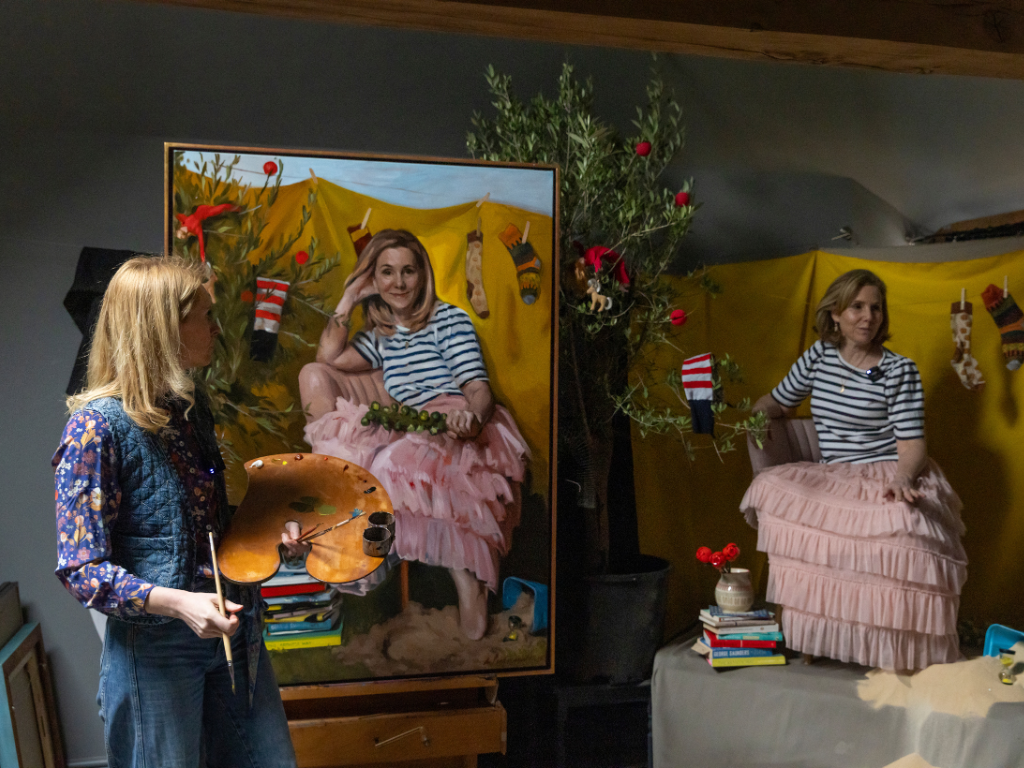
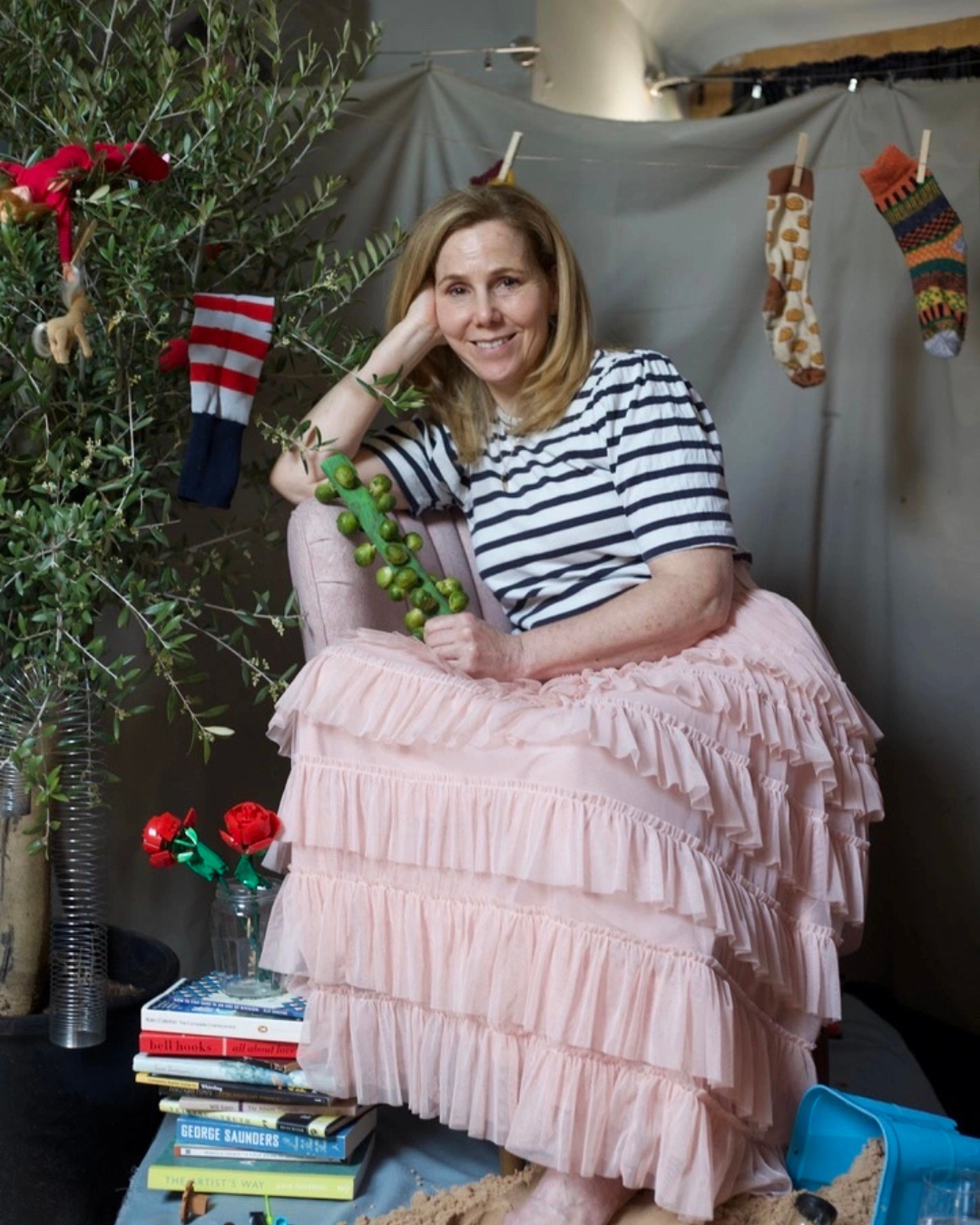
In Conversation: behind the portrait
An edited excerpt from the conversation between Caroline de Peyrecave and Sally Phillips, recorded during the portrait’s unveiling at Caroline’s studio.
Sally: How does one respond to being confronted with someone else's perception of you?
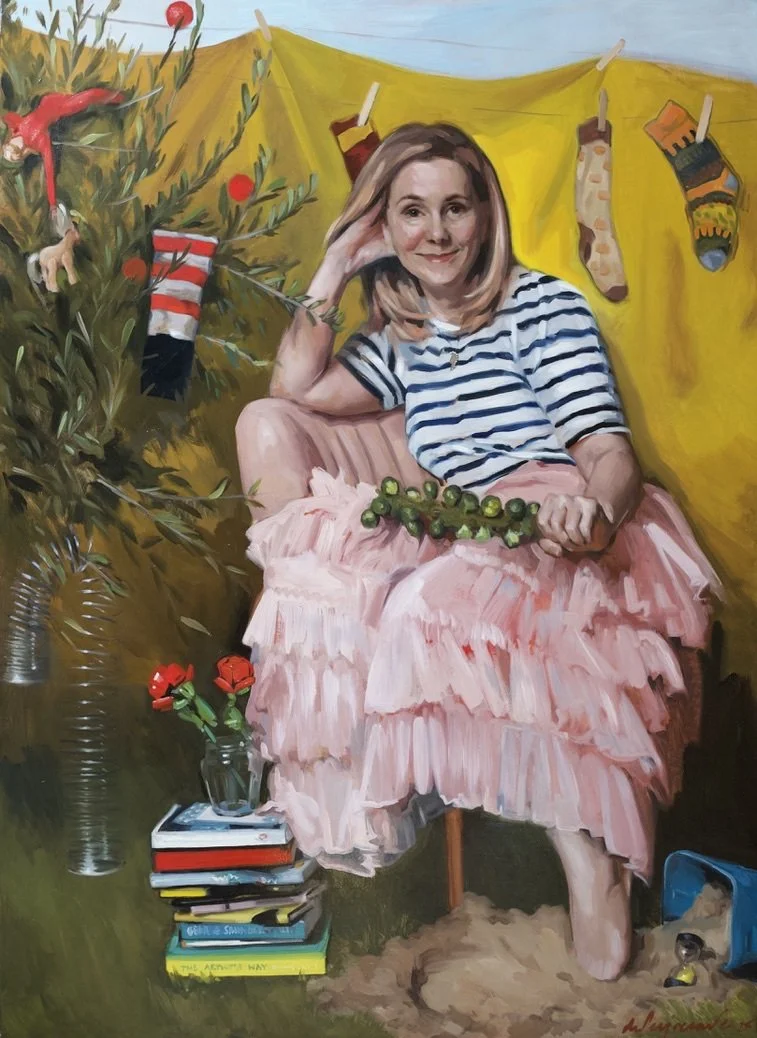
The first piece Caroline unveils is the still life portrait built around the childhood toy "Action Woman", a nod to Sally's own memory of the doll, reimagined mid-relaxation rather than mid-battle.
Sally: Oh, I love it, I love it. Oh well that's not me, thank goodness! It's Action Woman. I love that you've made her sexy, because in real life Action Woman couldn't really do anything except bend her knees. And she only had the one outfit. I love it, I love it. I love that she’s relaxed and a bit sexy. Go you, you're so clever. And she's got a Mona Lisa smile, which she definitely didn't have in real life.
Caroline: It's a little bit sexual but quite open and vulnerable. She's nurturing the pony rather than smacking it.
Sally: It’s wonderful.
Caroline: This one is for sale, with one hundred percent of proceeds are going to UN Women UK.
Sally: Oh wow, that’s fantastic. I love it. I love that she’s relaxing. It looks sexual but it isn’t, because she’s wearing a onesie. My mother was – is – a feminist, which is a good thing, but I wasn't allowed Barbie or Cindy. I was only allowed Action Woman, who had one outfit and a ginger fringe. Even as a kid I remember thinking, "this isn't what adults are supposed to look like", and that's exactly why she felt significant to me. She just definitely wasn’t as Ivana Trump as Barbie and Cindy. This doll wasn’t there to be beautiful, she was there to be doing thing.
Sally: I felt really disappointed and the odd women out to have this doll at the time. Of course now it's much cooler to have had her. It's a kind of active response, isn't it.
Caroline: I’ve got this array
Sally: How was it, people turning up with all their symbolism? Bringing objects that mean something to them?
Caroline: It’s so fascinating, it opens up this conversation about why these objects mean something to you and how other people relate to you and find those similarities or differences.
Sally: It's interesting for me, because I'm so used to my "precious objects" being my kids, you don't think much beyond them. So being asked to bring something that wasn't my children took some thought. As you pointed out in the press release, I clearly hadn't thought about it that deeply, I just grabbed things that were near the front door and put them in a bag.
Sally: I love that picture.
Caroline: I love the way it's almost like a nest, the brushwork somehow does that, and yet you can still tell exactly who it is.
Sally: You can still tell it’s a doll, but she's ever so slightly alive. Why did you choose to paint that moment, rather than, say, the Brussels sprouts or the olive tree?
Caroline: It's the relationship, between the childlike innocence we're conditioned to associate with dolls, and everything else underneath. Like with a lot of your work, it’s about finding that comedy in these interactions, there’s so much you can talk about.
Sally: There's also that thing of who you think you're going to be when you're young and playing with your dolls, the future lives you're acting out, and then life comes in like a great alligator and gets you.
Caroline: I had blonde hair and thought, "maybe I should be more like Barbie."
Sally: I definitely felt wrong because of her. Do you remember Girls World? Literally a beheaded plastic head that you'd style hair and makeup on. That got banned in our house, my mother thought it was too shallow, too focused on looks. In fact she cut my hair when I was nine because she thought I was getting too vain. She wanted me to stop looking in the mirror. So I became an actress, being looked at the whole time instead.
Caroline: Looking back, do you think that was helpful in the long run?
Sally: I honestly don't know, I can't put a value judgement on it. I could easily see myself making the same kind of mistake with my own kids.
Caroline: It's hard to find the balance, because the smallest comment can stay with you for a lifetime. Which I know has happened to you.
Sally: And I've done it to my own boys too. You come home and they've eaten three jars of Nutella and you say something like "you're going to get fat" without meaning to.
Caroline: But that's partly the world we live in, not entirely our fault.
Sally: I think we just have to make peace with the fact there's no correct way of doing anything, and hope that comes through to them. We're all a bit of a mess in my family, and we've got each other because of it.
Caroline: That's human, and there's beauty in that right.
The mood shifts as Caroline reveals the more intimate, painterly portrait of Sally herself.
Sally: I think that’s amazing, it’s amazing how you can capture a long piece of time in one moment, which is very hard to do with a photograph. It's as if you'd just told me a tragic story, felt embarrassed for oversharing, tried to cover it with a joke, and this is the silence right after, wondering how it’s landed.
Caroline: I can really feel that. Again, it's that normal humanity. I love that you feel it's been captured, because it's real.
Sally: It’s amazing, you’re so clever. So clever.
Caroline: How does it make you feel, looking at it now? Does it make you feel proud?
Sally: Quite emotional. Proud, really, proud that you chose to paint me. That's an incredible honour. Seeing this reflection of myself gives me a kind of outside perspective, that's genuinely how I see myself.
Caroline: It tells a wider story, not just one moment: the sadness before, then the happiness came.
Sally: I do believe I’ve had this amplified life. Life comes and gets us all with different things. I've been lucky in that my challenges haven't involved much physical pain, but they've deepened and widened how I understand being alive, including watching my kids go through hard things. Seeing your kids suffer is difficult. What's been extraordinary is how humour makes it better. The sense of humour in the special needs community is something else entirely, it's a gift,
Caroline: That’s your gift. And you’ve been passing it on.
Watch the full conversation with all eight sitters
Recorded at Green & Stone Gallery at the Private View of Empowering Her. This conversation features Nazanin Zaghari-Ratcliffe, Dame Maggie Aderin-Pocock, Emma Barnett, Sally Phillips, Lady Phyll, Daryl Fielding, Zoe Stratford and General Dame Sharon Nesmith.
Explore the collection
-
![Nazanin Zaghari Ratcliffe Portrait Thumbnail]()
Nazanin Zaghari-Ratcliffe
A writer, mother and human rights advocate, Nazanin’s six years of unjust imprisonment demanded extraordinary resilience.
-
![]()
Sally Phillips
Comedian, actor and writer, Sally Phillips has built a career by telling the truth through humour.
-
![]()
General Dame Sharon Nesmith
The first female four-star general and the highest-ranking military officer in the British Army, General Nesmith's career has reshaped what's possible for women in the Army.
-
![]()
Lady Phyll Opoku-Gyimah
Co-founder of UK Black Pride and a global LGBTQ+ advocate, Lady Phyll has spent her life creating space for others to exist fully and safely.
-
![]()
Emma Barnett
Award-winning broadcaster and journalist, Emma has built a career centred on listening deeply.
-
![]()
Zoe Stratford
Captain of England’s Red Roses and World Rugby Women’s Player of the Year, Zoe has become one of the defining leaders in women’s rugby.
-
![]()
Daryl Fielding
Marketing leader and creative force behind Dove’s Real Beauty campaign, Daryl Fielding helped transform how women and girls see themselves.
-
![]()
Dame Maggie Aderin-Pocock
Space scientist, educator and broadcaster, Dr Maggie has spent her career opening up science to wider audiences who’ve never seen themselves reflected in STEM.